New webinar: Can you really change your microbiome?
The microbiome is increasingly coming into focus. A large number of diseases are now directly associated with changes in the microbiome. The obvious reverse conclusion is: if I optimize my microbiome, I will stay healthy. But is this really true? And can the microbiome really be changed so easily?
The microbiome between stability and adaptability
The microbiome in general and the dominant gut microbiome in particular influence metabolic processes, support the immune system and interact closely with neurological functions. Studies show two seemingly contradictory properties at the same time: a surprising stability over years and even decades as well as a limited ability to adapt to diet, lifestyle and medication and environmental factors.
The crucial question is therefore not only whether the microbiome can be changed, but when and under what conditions such changes make sense.
Modern lifestyle and its consequences
The industrial age with its changing lifestyles has had a lasting impact on our microbiome. Studies consistently show that the microbial diversity of people living in cities and leading a Western lifestyle is decreasing. At the same time, the composition of microbial populations is shifting in directions associated with metabolic, inflammatory and neurodegenerative diseases.
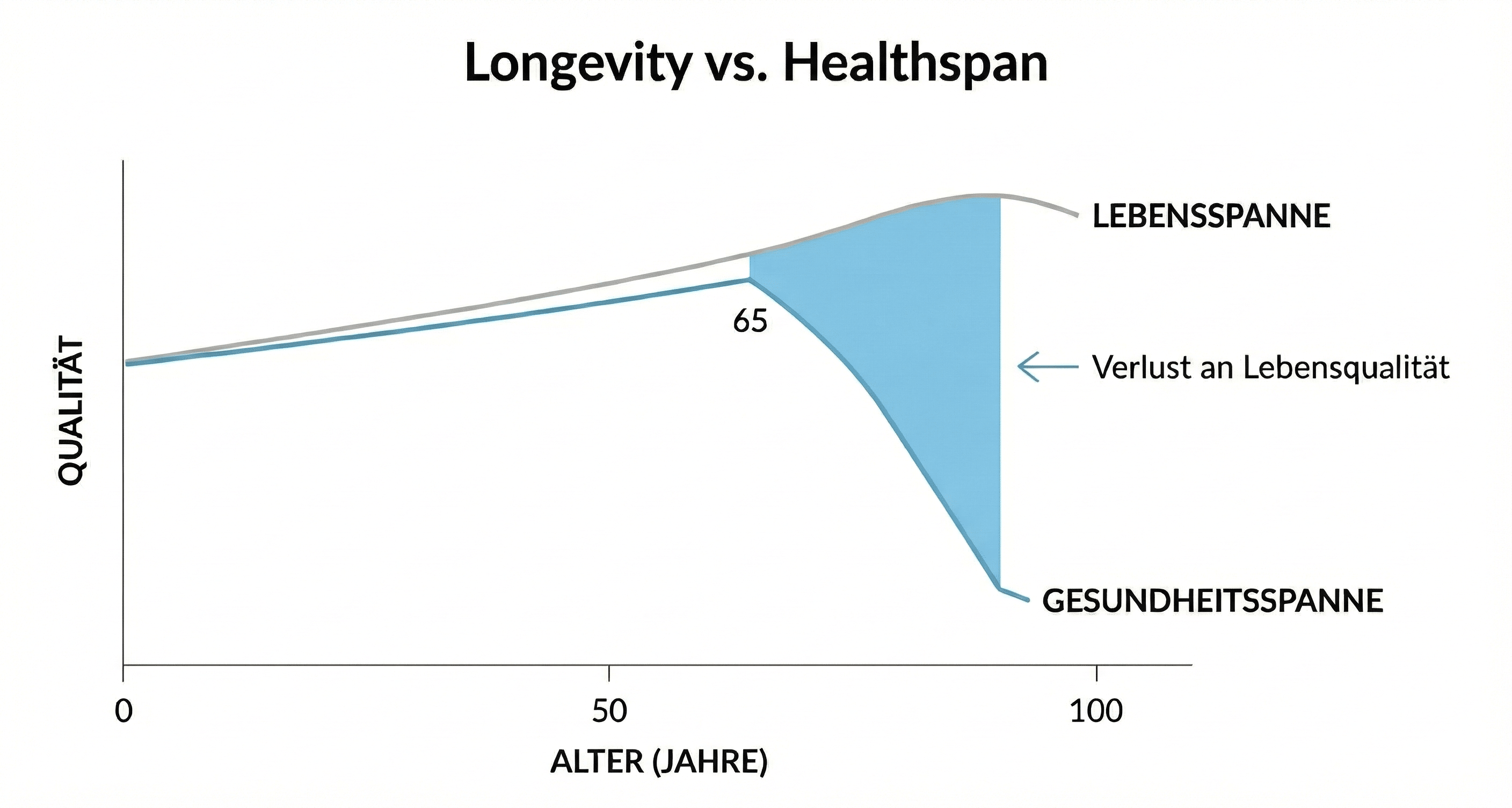
Although people are getting older on average, the quality of life in old age is declining due to the increase in neurodegenerative diseases. Longevity has become a fashionable term. However, it is often overlooked that a long life alone is not enough. Growing old in good health is the real goal.
The desire to exert influence
Modern people are used to being able to influence their own situation. Increased awareness of their own body and health leads to an understandable desire to actively shape their own destiny.
The desire to specifically influence one’s own microbiome is correspondingly great. But can the microbiome really be changed in the long term?

Biological boundaries and early imprinting
The human microbiome exhibits astonishing stability. It establishes itself in the first three years of life and forms the microbial basis for the rest of our lives. How much leeway is actually left under these conditions?
And even if changes are possible, the next question arises: does it always make sense to want to intervene?
Because not every change makes sense. Some interventions shift the microbiome towards instability or dysbiosis. Even the much-vaunted diversity is not the measure of all things. A diverse microbiome is not automatically a functionally good microbiome.
Disruptive factors, interventions and their consequences
In addition, there are negative influences from lifestyle factors and medicines, especially antibiotics. They have a deep impact on the microbial ecosystem. How does the microbiome react to this? And what options are there for limiting damage to our microbiome or supporting regeneration?

Complexity instead of simplification
A systematic view is essential in order to be able to answer these questions in a well-founded manner. Without scientific classification, there is more uncertainty than benefit. Anyone who tries to change a complex biological system without understanding its dynamics will inevitably end up in chaos.
The gut microbiome is not the only microbiome that plays a role. The human body consists of a finely balanced network of different microbial habitats that all work together and need to be considered as a whole.
Measurability, myths and reality
And can microbiome analyses provide any information at all about whether and to what extent the microbiome is changing? Are today’s technologies robust enough? What can simple tests do for consumers? Can effects be measured at all?
The uncertainty is high.
This is exactly where the webinar comes in. It offers evidence-based guidance in the jungle of microbiome promises.
It provides a look behind the scenes:
- real data
- comprehensible connections
- clear distinction between reliable knowledge, plausible speculation and pure marketing.
The field of the microbiome is characterized by myths, simplifications and economic interests. Quick fixes are common, but rarely make sense. Supposed experts discuss bacterial compositions as if the microbiome is an open book that only needs to be read correctly.
But is it really that simple? Or are we experiencing a hype that deliberately ignores scientific uncertainties?
There is also countless fake news in the field of microbiology. “Quo bono”, who benefits from it, is the central question here too.
Orientation instead of promises of salvation – register now for free
This webinar deliberately dispenses with promises of salvation and long-winded theory. It offers guidance in the microbiome jungle. Experienced microbiologists show what can realistically be changed in your own microbiome and what cannot.
Because the microbiome is too important not to understand it.