
Symptoms of Fiber Deficiency: What Are the Real Signs?
How can you tell if you’re not eating enough fiber? Observational studies show a link between a high fiber intake and a lower risk of death. So you might think that most people make sure to eat enough of it. In reality, however, the German population consumes, on average, only slightly more than half of the recommended amount.
The question remains: how can you tell if you’re one of them?
A fiber deficiency refers to a situation in which daily fiber intake remains significantly below the recommended 30 grams over an extended period. Unlike a vitamin or iron deficiency , however, it cannot be easily determined, as there is no specific diagnosis or blood test that clearly indicates it.
That doesn’t make it any less relevant. Large meta-analyses show that a chronically low fiber intake is associated with significant health consequences.
Most people don't eat enough fiber
If you've never given much thought to your fiber intake, there's a good chance you're not getting enough. On average, women in Germany consume 18 grams per day and men 19. So, on average, people are falling short of the recommended amount by more than ten grams per day.
This may be due to the following reasons:
Many people think they eat enough
A Europe-wide survey showed that about half of the respondents believed they were consuming enough fiber. In the United Kingdom, 45 percent estimated their intake to be sufficient. However, national dietary data show that only about 9.6 percent of the population there meets the recommended amount.
Fiber content is overestimated
People often overestimate how much dietary fiber is actually in various foods. A small study involving 34 older adults demonstrates just how difficult this can be to estimate. They were asked to select a combination of 15 different foods that containeda total of 30 grams of dietary fiber. To achieve this, they would have needed to choose ten of the foods offered. However, on average, the participants selected only six, thereby significantly underestimating how much they would need to eat to reach the recommended amount.
The benefits are not well known
Dietary fiber is often associated primarily with healthy digestion . However, different types of dietary fiber serve many other functions as well, such as acting as a food source for the gut microbiome. While there is a lot of talk these days about adequate protein intake , dietary fiber is much less frequently the focus of discussion. Yet its importance to our health is often underestimated.

Symptoms of Fiber Deficiency: Can You Really Tell If You Have Them?
Yes and no. There are some symptoms that may stem from an insufficient fiber intake —or at least be partially related to it. At the same time, however, these symptoms are usually nonspecific and can have many other causes, so they aren’t clear-cut signs of insufficient fiber intake. Unfortunately, there isn’t a single symptom of a fiber deficiency that makes it easy to identify. Still, it’s worth taking a look at what you might notice if your fiber intake is low.
What the Gut Reveals—and What It Doesn't
Constipation
Constipation is one of the best-documented potential symptoms associated with a low-fiber diet. A 2019 study examined more than 14,000 adults and found a link between lower fiber intake and a higher likelihood of constipation. In addition , a meta-analysis shows that fiber supplementation can reduce symptoms in some affected individuals, though not in all.
Constipation can therefore be related to a low fiber intake, but it can also have many other causes. As a standalone symptom, it is therefore not meaningful enough.
Hard or lumpy stool
A large systematic review summarizing numerous randomized trials showed that a higher fiber intake is, on average, associated with slightly softer stools. However, the effect was rather small. Hard or lumpy stools may therefore be a possible indication of low fiber intake.
Transit time
Transit time refers to how long it takes for food to pass through the entire gastrointestinal tract . Dietary fiber can affect this time. On average, a higher intake of dietary fiber is associated with a slightly shorter transit time . It’s important to note, however, that there is no single “perfect” transit time that applies to everyone. In a study of healthy adults, the median total transit time was about 23 hours, but it ranged from 12 to 72 hours. This wide individual variation means that transit time is not a reliable indicator of a fiber deficiency.
Praxis-Test: So kannst du Deine Transitzeit bestimmen
Wer schon einmal Mais gegessen und danach einen Blick auf seinen Stuhl geworfen hat, kennt das Phänomen: Teile der Maiskörner sind oft noch deutlich erkennbar. Genau das kann man nutzen, um die eigene Transitzeit zu bestimmen.
Notiere dir dafür, an welchem Tag und zu welcher Uhrzeit du den Mais gegessen hast und wann du die ersten Maisreste im Stuhl wiederfindest. Die Zeit dazwischen gibt an, wie lange der Mais für die Passage durch deinen Magen-Darm-Trakt gebraucht hat.
Der Mais-Test ist allerdings kein medizinisch genauer Test und sagt auch nichts darüber aus, ob du genügend Ballaststoffe isst. Er kann dir lediglich einen groben Eindruck von deiner Transitzeit geben.
Common Symptoms of Fiber Deficiency: What's Really Behind Them?
If you search the Internet for symptoms of a fiber deficiency, you’ll often find complaints such as fatigue or constant hunger. But what’s really behind this, and how well are these connections scientifically supported?
Fatigue and difficulty concentrating
At first glance, the explanation sounds plausible: Certain types of dietary fiber —especially viscous fiber —can help slow the rise in blood sugar after a meal. This is very well supported by scientific evidence.
People often conclude from this that significant fluctuations in blood sugar levels—which can lead to an "energy slump" accompanied by fatigue or difficulty concentrating—are avoided.
However, human studies have not yet been able to confirm this link so clearly. In one study, participants were given breakfasts containing varying amounts of carbohydrates and fiber. The results did not show a clear correlation: a higher fiber intake did not lead to less fatigue or, in general, to better cognitive performance.
However, there is a second possible connection: the gut-brain axis. Fermentable dietary fiber is metabolized by gut bacteria and can thereby alter the composition and activity of the gut microbiome. This, in turn, could influence communication between the gut and the brain.
Initial, small-scale human studies are showing interesting results in this area. After taking certain fermentable dietary fibers for several weeks, the participants’ cognitive performance improved. At the same time, their gut microbiota also changed. However, it has not yet been conclusively proven whether these changes in the microbiome were actually responsible for the observed effects.
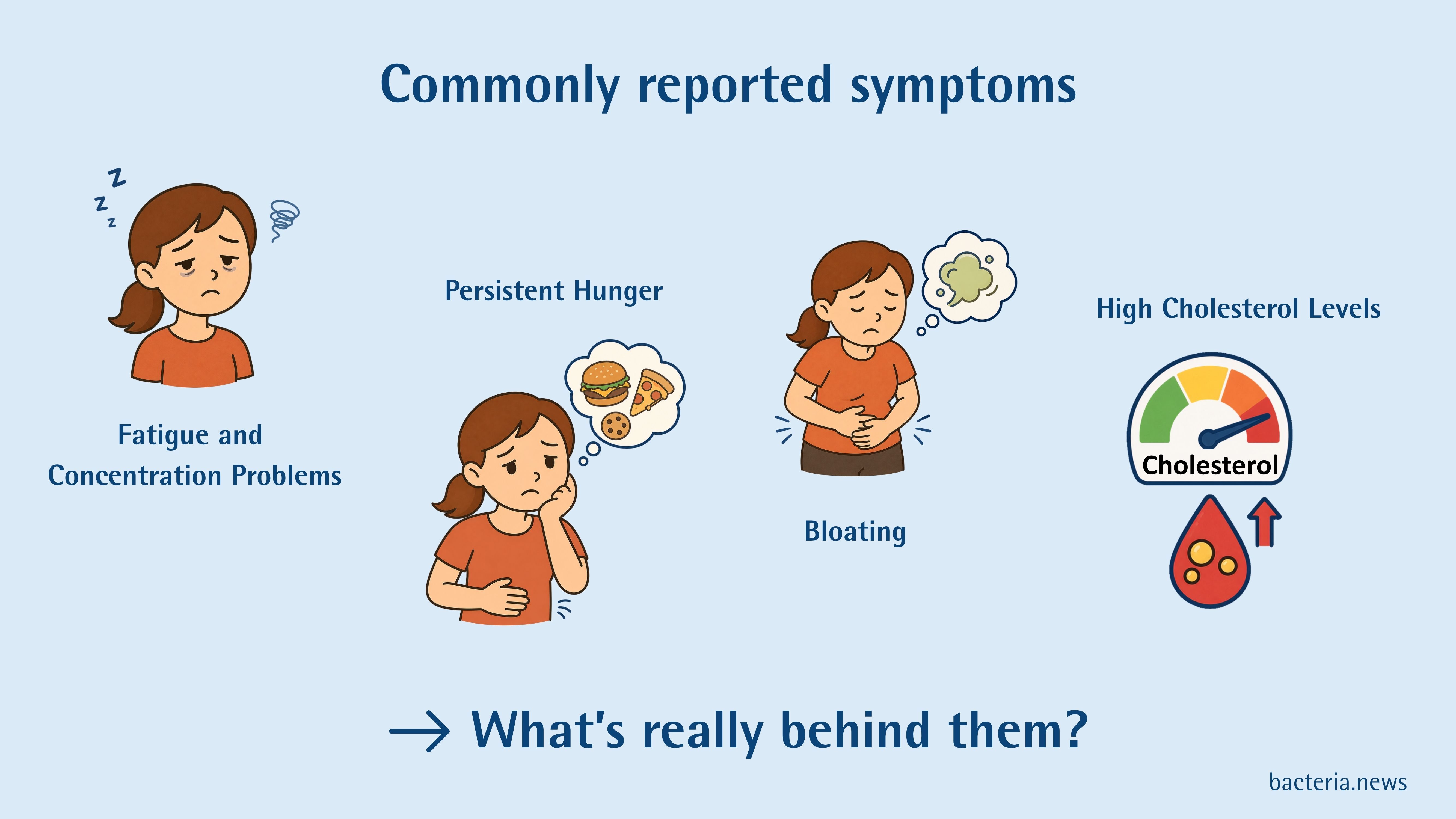
Constant Hunger
You often read that a low-fiber diet leads to constant hunger and makes you feel less full. But does this claim hold up to scientific scrutiny?
Dietary fiber can actually help you stay full longer. Two different mechanisms play a role here: a physical one and a microbial one.
The physical method:
Certain types of viscous dietary fiber make food more viscous. This can slow down digestion and the absorption of certain nutrients. This can help you feel full longer.
The microbial pathway:
Fermentable dietary fiber , on the other hand, is metabolized by gut bacteria in the large intestine. This process produces, among other things, short-chain fatty acids such as acetate, propionate, and butyrate. These can act on so-called enteroendocrine cells in the intestinal wall. These cells secrete, among other things, the hormones PYY and GLP-1. Both are involved in regulating appetite and satiety and are therefore often referred to as “satiety hormones.” Short-chain fatty acids can influence the release of these hormones and, as a result, potentially also our feelings of hunger and satiety.
Flatulence
Flatulence is also often cited as a possible sign of a fiber deficiency. However, the relationship is much more complex.
Bloating can occur, among other things, when gut bacteria metabolize fermentable dietary fiber in the large intestine. This process produces gases, among other substances, which can lead to an uncomfortable sensation. That is why a rapid increase in dietary fiber intake, in particular, can initially lead to more bloating.
Interestingly, the gut can adapt to this over time. In a human study, gas production initially increased after consuming a fermentable dietary fiber, but dropped back to approximately the baseline level after two weeks.
Therefore, bloating is not a clear sign that you are not eating enough fiber. Quite the contrary: especially when you quickly increase your intake of fermentable fiber, bloating may actually increase at first.
High Cholesterol Levels
High cholesterol levels are also sometimes cited as a possible sign of insufficient dietary fiber.
The effect of soluble, viscous dietary fibers—such as beta-glucan from oats or psyllium husks—has been particularly well studied. These fibers can form a gel-like mass in the intestine, thereby reducing the reabsorption of bile acids in the intestine. As a result, more bile acids are excreted in the stool. The liver must produce new bile acids and uses, among other things, cholesterol from the blood to do so. This can lower LDL cholesterol levels.

So there are indeed plausible mechanisms behind many of the commonly cited symptoms. The problem, however, is that these symptoms are usually very nonspecific. While they may be related to a low fiber intake, they could just as easily have completely different causes.
At the same time, the absence of these symptoms does not mean that you are automatically getting enough fiber. Whether and how a low fiber intake manifests itself depends on several factors. For example, key factors include the types and amounts of fiber consumed, the overall composition of one’s diet, and how one’s body reacts to it.
Unfortunately, there are no clear symptoms of fiber deficiency.
The risk lies in the unnoticed
The problem: A fiber deficiency does not always manifest itself through the symptoms listed above. In particular, a deficiency in fermentable fiber can affect processes in the gut that we cannot immediately perceive.
If you don’t eat enough fermentable fiber, many bacteria in the large intestine lack an important source of nutrition. On the one hand, this can alter the composition of the microbiome , and on the other hand, it can influence which metabolic products the bacteria produce. As a result, the delicate balance between the microbiome and the body can be disrupted.
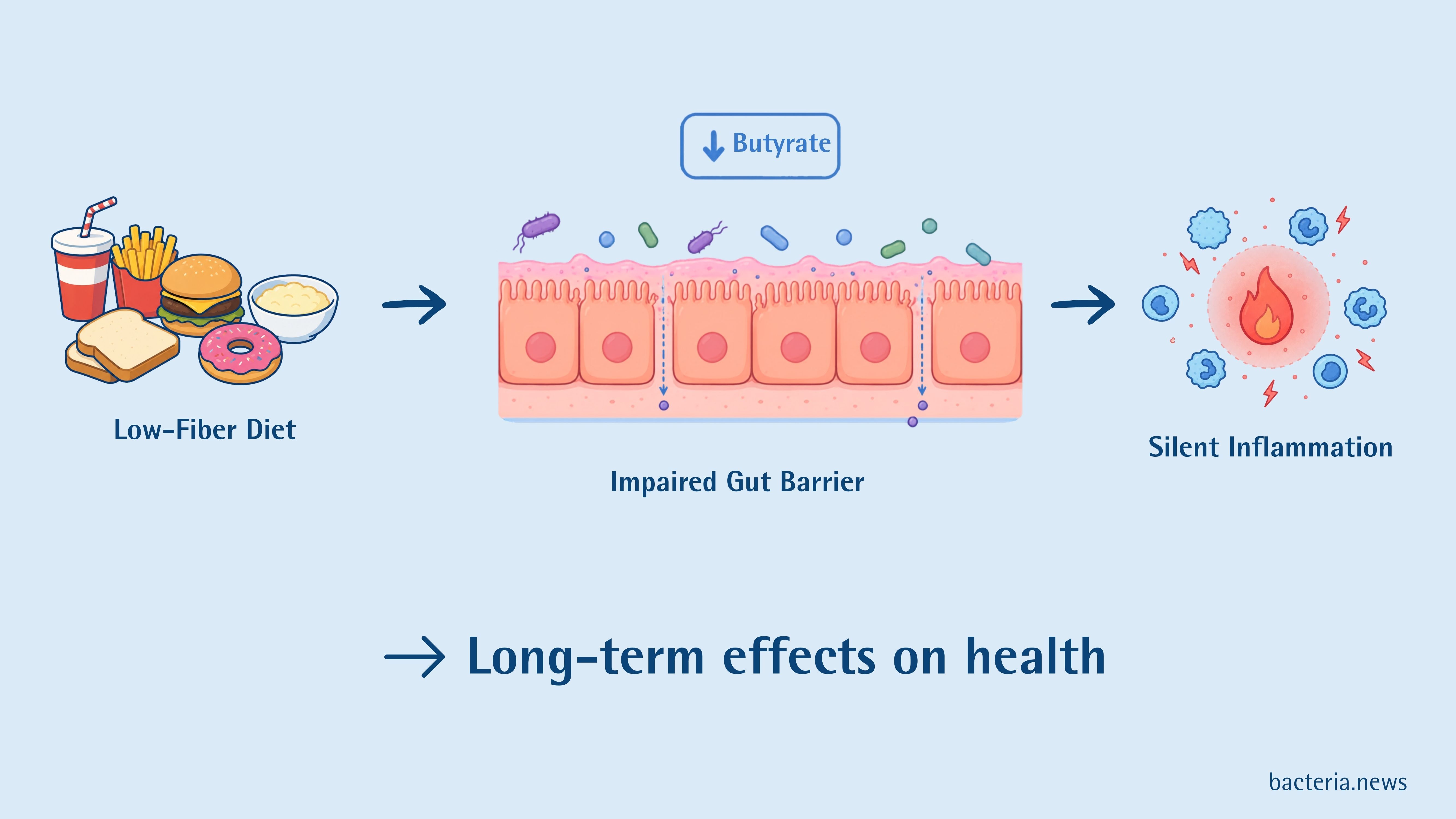
A lack of dietary fiber can contribute to a weakened intestinal barrier. Animal models, for example, show that the mucus layer can become thinner when, due to a lack of dietary fiber, gut bacteria increasingly rely on components of this layer as a food source. At the same time, fewer short-chain fatty acids —including butyrate, the primary source of nutrition for colonocytes, an important cell type in the intestinal mucosa—may be produced.
In addition, there is data—primarily from cell and animal models—showing that butyrate supports what are known as “tight junctions.” These are proteins that hold our intestinal cells together so tightly that bacterial components cannot simply pass through. If butyrate levels drop, the gut’s barrier function can therefore be compromised. Bacterial components can then more easily come into contact with the immune system and activate it.
Such processes can contribute to chronic low-grade inflammation, often referred to as “silent inflammation.” This type of inflammation can go unnoticed for a long time, but it is associated with various diseases and may play a role in their development.
Even if no acute symptoms are noticeable, a consistently low fiber intake can therefore have long-term health implications. One example of this is what is known as “inflammaging.” This refers to the fact that chronic, low-grade inflammation in the body increases with age and is associated with various age-related changes.
So how can you tell if you're eating enough fiber?
The most practical and reliable way to figure out whether you're getting enough fiber in your daily life is to track your diet. You can do this by hand or, even more easily, with an app. There are now some good, free apps that list the fiber content of various foods.
Of course, you don’t have to track this every day. It’s best to simply check your average fiber intake on a few typical days. If it’s consistently below the recommended amount, the next step is to consider how you can incorporate more fiber into your diet. Once your diet has been adjusted, you can track a few selected days again to see if your fiber intake has improved. This can also help you develop a better sense over time of how much fiber is actually contained in various foods.
The absence of complaints is not proof
A fiber deficiency is a tricky issue, because it’s easy to get the impression that as long as you don’t have any symptoms, you can’t possibly be deficient. The problem is that many of the consequences go unnoticed at first. But even without acute symptoms, a consistently low fiber intake can have long-term health implications.
That's why it's important to be aware of how much fiber you consume each day and to check your intake from time to time.
Sources
Alvarado, David A., Tori A. Holthaus, Shelby Martell, et al. “Effects of Soluble Corn Fiber Consumption on Executive Functions and Gut Microbiota in Middle-Aged to Older Adults: A Randomized Controlled Crossover Trial.” The Journal of Nutrition 156, No. 5 (2026): 101473. https://doi.org/10.1016/j.tjnut.2026.101473.
Azaïs-Braesco, Véronique, Anne Lionnet, Matthieu Maillot, and Marjukka Kolehmainen. “Consumers Vary in Their Attitudes and Expectations about Dietary Fiber: Analysis of Answers to a Pan-European Online Survey.” Public Health Nutrition 29, No. 1 (2026): e74. https://doi.org/10.1017/S1368980026102298.
Balk, Ethan M., Elyse Couch, Htun Ja Mai, et al. “Fiber Intake and Laxation in People with Normal Bowel Function: A Systematic Review.” The American Journal of Clinical Nutrition 123, No. 3 (2026): 101212. https://doi.org/10.1016/j.ajcnut.2026.101212.
Berding, Kirsten, Caitriona M. Long-Smith, Carina Carbia, et al. “A Specific Dietary Fiber Supplementation Improves Cognitive Performance—an Exploratory Randomized, Placebo-Controlled, Crossover Study.” Psychopharmacology 238, No. 1 (2021): 149–63. https://doi.org/10.1007/s00213-020-05665-y.
Cani, Patrice D., Elodie Lecourt, Evelyne M. Dewulf, et al. “Gut Microbiota Fermentation of Prebiotics Increases Satietogenic and Incretin Gut Peptide Production with Consequences for Appetite Sensation and Glucose Response after a Meal.” The American Journal of Clinical Nutrition 90, No. 5 (2009): 1236–43. https://doi.org/10.3945/ajcn.2009.28095.
Mah, Eunice, DeAnn J. Liska, Shellen Goltz, and YiFang Chu. “The Effect of Extracted and Isolated Fibers on Appetite and Energy Intake: A Comprehensive Review of Human Intervention Studies.” Appetite 180 (January 2023): 106340. https://doi.org/10.1016/j.appet.2022.106340.
Mathews, Rebecca, Alison Kamil, and YiFang Chu. “Global Review of Heart Health Claims for Oat Beta-Glucan Products.” Nutrition Reviews 78, no. Supplement_1 (2020): 78–97. https://doi.org/10.1093/nutrit/nuz069.
Mego, M., A. Accarino, G. Tzortzis, et al. “Colonic Gas Homeostasis: Mechanisms of Adaptation Following HOST-G904 Galactooligosaccharide Use in Humans.” *Neurogastroenterology & Motility* 29, No. 9 (2017): e13080. https://doi.org/10.1111/nmo.13080.
Nabb, Samantha L., and David Benton. “The Effect of the Interaction between Glucose Tolerance and Breakfasts Varying in Carbohydrate and Fiber on Mood and Cognition.” *Nutritional Neuroscience* 9, no. 3–4 (2006): 161–68. https://doi.org/10.1080/10284150600955099.
Norton, Victoria, Stella Lignou, and Julie A. Lovegrove. “Why Isn’t Fiber Mentioned More Often? Conducting Focus Groups with an Aging Population to Promote Awareness of Dietary Fiber and Start the Conversation.” Appetite 223 (August 2026): 108563. https://doi.org/10.1016/j.appet.2026.108563.
Procházková, Nicola, Martin F. Laursen, Giorgia La Barbera, et al. “Gut Physiology and Environment Explain Variations in Human Gut Microbiome Composition and Metabolism.” *Nature Microbiology* 9, No. 12 (2024): 3210–25. https://doi.org/10.1038/s41564-024-01856-x.
Shen, L., C. Huang, X. Lu, X. Xu, Z. Jiang, and C. Zhu. “Lower Dietary Fiber Intake, but Not Total Water Consumption, Is Associated with Constipation: A Population-Based Analysis.” Journal of Human Nutrition and Dietetics 32, no. 4 (2019): 422–31. https://doi.org/10.1111/jhn.12589.
Tolhurst, Gwen, Helen Heffron, Yu Shan Lam, et al. “Short-Chain Fatty Acids Stimulate Glucagon-Like Peptide-1 Secretion via the G-Protein–Coupled Receptor FFAR2.” Diabetes 61, No. 2 (2012): 364–71. https://doi.org/10.2337/db11-1019.
Van Der Schoot, Alice, Candice Drysdale, Kevin Whelan, and Eirini Dimidi. “The Effect of Fiber Supplementation on Chronic Constipation in Adults: An Updated Systematic Review and Meta-Analysis of Randomized Controlled Trials.” The American Journal of Clinical Nutrition 116, no. 4 (2022): 953–69. https://doi.org/10.1093/ajcn/nqac184.
Yang-Jensen, Sune K., Nora S. Nägele, and Benjamin A. H. Jensen. “From Gut to Blood: Barrier Dysfunction as a Driver of Systemic Low-Grade Inflammation in Cardiometabolic Disease.” American Journal of Physiology-Cell Physiology 329, no. 6 (2025): C1723–41. https://doi.org/10.1152/ajpcell.00704.2025.
Zurbau, Andreea, Jarvis C. Noronha, Tauseef A. Khan, John L. Sievenpiper, and Thomas M. S. Wolever. “The Effect of Oat β-Glucan on Postprandial Blood Glucose and Insulin Responses: A Systematic Review and Meta-Analysis.” European Journal of Clinical Nutrition 75, no. 11 (2021): 1540–54. https://doi.org/10.1038/s41430-021-00875-9.