A High-Protein Diet: Good for Your Health or Bad for Your Gut and Microbiome?
A sweet protein shake in the morning, a protein bar in the afternoon, and another shake in the evening after working out. For some people, this is a familiar routine and has long since ceased to be just a bodybuilder’s ritual. That’s because a high protein intake is one of the major current trends in the food and health industries. Protein bars, shakes made with whey or vegan protein, protein bread, protein pasta, and many other high-protein products line the shelves of supermarkets and online stores.
At the same time, there is a growing recognition that the gut microbiome—with its estimated 38 trillion bacteria —plays a significant role in our health. But how do protein and the microbiome interact? The information available online is contradictory. Some claim that a high-protein diet harms the gut because it leads to “putrefaction” there. Others are more cautious.
This review article on protein, the gut, and the microbiome examines the latest research findings and critically evaluates prevailing views.
Without proteins, humans could not survive. They are components of nearly all cells and tissues. Among other things, they function as enzymes, transport molecules, and receptors, and, as structural proteins, they provide stability to cells and tissues. Muscles, organs, and the immune system also depend on proteins. Almost every process in the body requires them.
Proteins consist of long chains of amino acids and are synthesized in human cells at the ribosomes. Proteins from food must therefore first be broken down into amino acids before they can be reused by the cells to build the body’s own proteins.
Twenty amino acids are needed to build human proteins. Nine of them are essential. The body cannot synthesize these nine amino acids on its own and must therefore obtain them from food.
Short chains of amino acids are called peptides; longer chains that are spatially folded are called proteins.
In short: No life without protein.
Benefits of a High-Protein Diet: Protein Biohacking
In addition to being essential, proteins offer exactly the benefits that lifestyle biohackers are looking for: They promote muscle protein synthesis and, when combined with strength training, can effectively support muscle and strength gain.
This becomes particularly important as we age. Muscle mass begins to gradually decline as early as age 40. Between 3 and 8 percent of muscle mass can be lost per decade. That’s why protein, along with regular physical activity, is essential for maintaining or even further building muscle mass.
But there’s more: On average, protein is more filling than carbohydrates and fat. It can reduce feelings of hunger, increase the release of the infamous—but in this case, naturally occurring— GLP-1, and prolong the feeling of fullness. The body also requires more energy to digest and metabolize protein than it does for fats and carbohydrates, which helps reduce excess body fat when following a calorie-restricted diet.
So who would want to miss out on all these benefits?
The Crux of the Bottleneck
Not all amino acids are created equal. To successfully build proteins, the body needs not only all amino acids, but also the required amounts of each. This is because they do not all occur in proteins in the same proportions. If an amino acid is frequently needed but is not present in sufficient quantities, this limits the utilization of the other amino acids. It becomes the limiting factor.
Just as the amount of cake you can bake is not unlimited—even if you have enough flour, sugar, and butter—because you only have one egg, the same is true for protein synthesis. If an essential amino acid is lacking, the entire protein biosynthesis process grinds to a halt.
This is especially important for a vegan diet, because animal protein sources such as eggs, dairy products, meat, and fish contain all nine essential amino acids in the right proportions. If you choose to avoid these, plant-based protein sources should be combined in such a way that you consume sufficient amounts of the essential amino acids. This is because plant-based proteins can be deficient in certain amino acids: grains are low in lysine, and legumes are low in methionine. Soy, quinoa, and buckwheat, on the other hand, offer a balanced profile. In practice, this can be achieved by combining grains with legumes—for example, rice with beans, bread with lentils, and so on.
But how much of the protein we consume actually reaches where it's needed, and what happens to the rest?
The Journey Through the Digestive System
Food passes through the esophagus into the stomach and then into the small intestine. In the stomach, proteins are first broken down into shorter protein chains. This is followed by further breakdown in the small intestine into individual amino acids and short peptides.
The wall of the small intestine absorbs the amino acids as well as dipeptides and tripeptides; the latter are further broken down there into amino acids, so that only individual amino acids enter the bloodstream and are transported onward.

In most cases, however, a residue remains that continues on into the large intestine. This includes not only undigested proteins from food, but also proteins that have been only partially broken down, as well as the body’s own proteins, such as digestive enzymes, shed cells, and components of the intestinal mucus.
The amount of this residue depends on various factors, such as the amount of protein consumed, its digestibility, how it is processed, age, the source of the protein, and the condition of the small intestine.
The DIAAS (Digestible Indispensable Amino Acid Score) is used to evaluate protein quality. It takes into account both the content of essential amino acids and their digestibility, which is determined at the end of the small intestine.
Animal protein sources such as eggs, casein, and milk protein often have values above 100, which is generally considered excellent. Values between 75 and 99 are considered high-quality, as is the case with soy, for example. Many isolated plant-based proteins fall below this range, such as rice, hemp, or oats. Does that mean these proteins are poor quality? No, absolutely not. This is because combinations of different protein sources, as well as their processing, can significantly increase the DIAAS value.
As with dietary fiber, the question now arises: If less protein is absorbed in the small intestine, won’t the bacteria in the large intestine automatically receive more food? So isn’t that actually better? That’s a logical line of reasoning in itself.
Unfortunately, though, it's wrong.
The Bioreactor in the Gut: The Gut Microbiome
Many bacteria in the large intestine are fermenters. This means that they ferment usable substances. These substances are primarily carbohydrates or protein residues that have passed through the small intestine without being fully digested and absorbed. In the process, the bacteria obtain energy and build up cell mass, enabling them to multiply through cell division. For this to happen, it is important that they receive sufficient “food.”
Carbohydrate Fermentation: One Side of the Coin
As soon as digestible carbohydrates enter the large intestine, they are broken down by bacteria.
Simple sugars such as glucose or fructose are normally absorbed in the small intestine and released into the bloodstream. Sucrose is first broken down into glucose and fructose. However, if absorption is incomplete, these simple sugars can enter the large intestine, where they are rapidly fermented. This process produces short-chain fatty acids, as well as lactate and gases. An excess of simple sugars can lead to overproduction of gases and osmotically active substances, which can cause bloating, pain, and diarrhea.
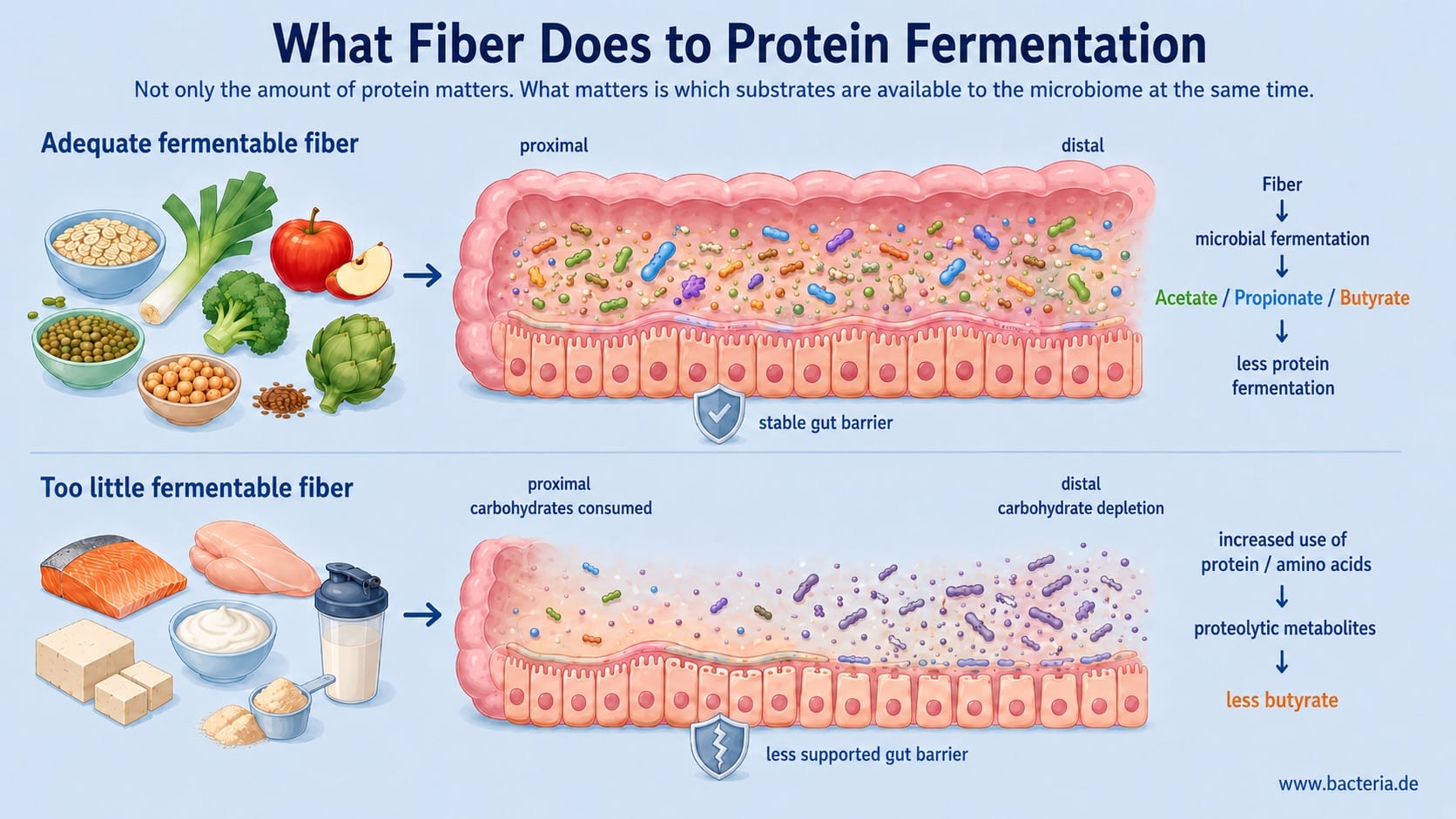
The key point, however, is that rapidly fermentable carbohydrates are already broken down in the anterior, proximal section of the large intestine. As a result, they cannot reach the bacteria located in the posterior, distal large intestine in sufficient quantities. Consequently, the microbial community must increasingly rely on other substrates, including proteins and their building blocks, the amino acids.
Overall, a lack of fermentable carbohydrates leads to a change in the activity of the entire microbial community and to altered substrate utilization.
Carbohydrates that are not digestible or only partially digestible—such as certain dietary fibers and resistant starch—are not fully digested or absorbed in the small intestine. As a result, they enter the large intestine in large quantities. How far they can travel there depends, among other things, on how quickly they are fermented by bacteria. Rapidly fermentable dietary fibers are broken down as early as the proximal region. Slowly fermentable dietary fibers, however, can travel further back and serve as food for the bacteria there.
During their fermentation, short-chain fatty acids are produced, primarily acetate, propionate, and butyrate. These have anti-inflammatory effects, lower the pH level, and make it more difficult for unwanted pathogens to colonize the intestinal mucosa. Butyrate is an important energy source for the cells of the colon mucosa and helps stabilize the intestinal barrier. According to current scientific knowledge, the adequate production of short-chain fatty acids is an essential functional characteristic of a healthy gut microbiome.
Protein Fermentation: The Other Side of the Coin
The other substrates to be utilized are protein residues and amino acids. Their microbial breakdown is referred to as proteolytic fermentation and was historically also called putrefaction. In addition to small amounts of beneficial short-chain fatty acids, this process also produces many other substances, some of which are beneficial, while others are potentially harmful. The specific substances produced depend primarily on the amino acids involved and the bacteria participating in the process.
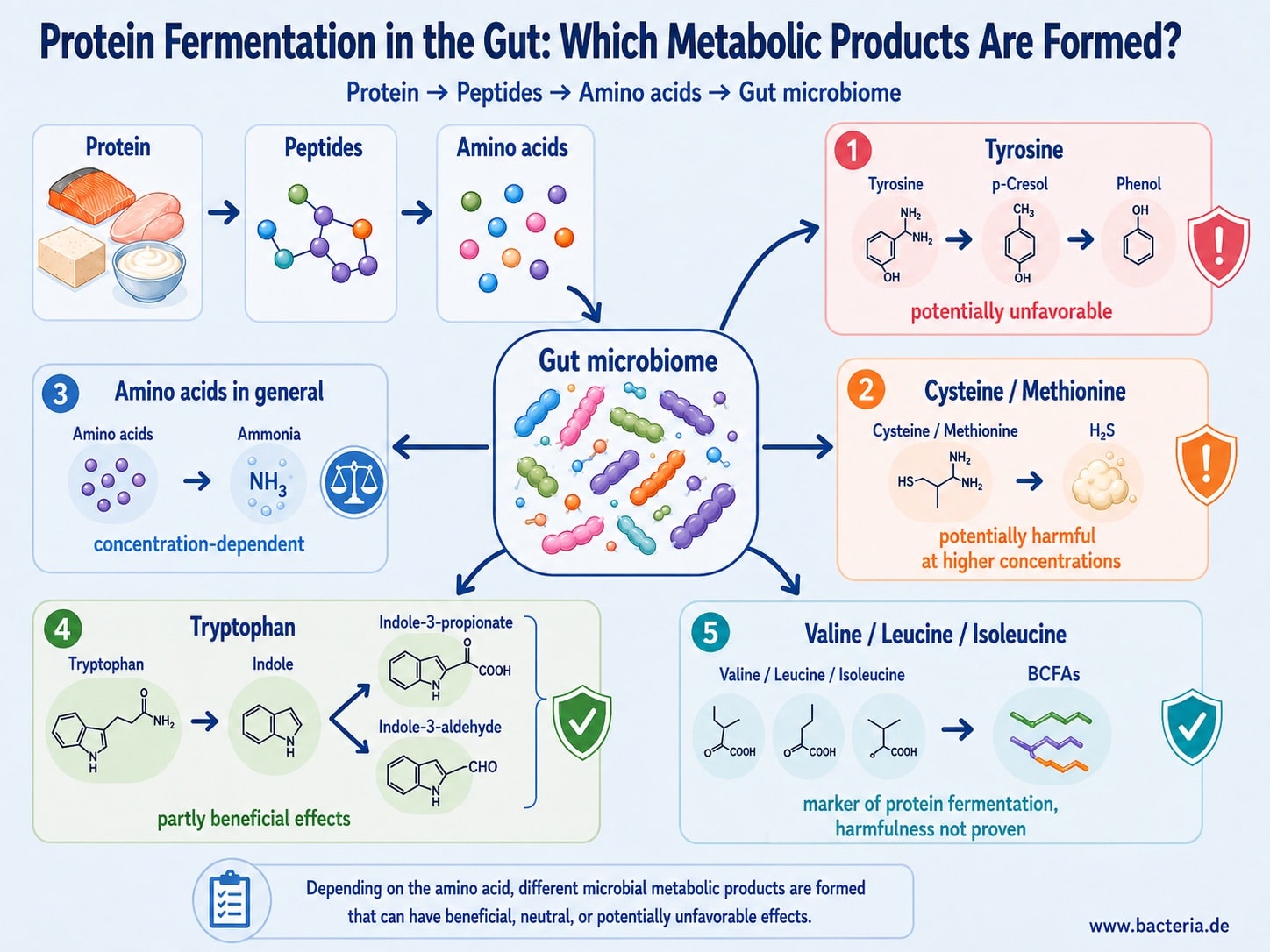
For example, p-cresol and phenol are derived from tyrosine. Cell models have shown that p-cresol can impair the proliferation and energy metabolism of intestinal epithelial cells and may have genotoxic effects. Phenol, too, can damage membranes and epithelial cells at higher concentrations.
Ammonia is produced during deamination—that is, the removal of the amino group from amino acids—and, in high concentrations, can also damage cellular metabolism and the intestinal barrier. At normal concentrations, however, its nitrogen is reused by bacteria and incorporated into their biomass.
Hydrogen sulfide, which is formed from sulfur-containing amino acids such as cysteine and methionine, can also impair energy metabolism and cause DNA damage. These effects are also known from cell models. Under normal circumstances, hydrogen sulfide is rapidly oxidized by the intestinal mucosa in the gut.
Protein fermentation can therefore produce a whole range of potentially harmful substances, which has led to the assumption that an excess of protein is harmful. However, many of these findings come from experiments using cell cultures and animal models. To date, controlled human studies have not demonstrated increased toxicity of intestinal contents in cases of elevated protein fermentation.
However, there are also microbial metabolites produced during protein breakdown that have positive effects on humans. In addition to the small amounts of short-chain fatty acids mentioned above, indole-3-propionate, which has antioxidant properties, strengthens the intestinal barrier, and—like indole-3-aldehyde, a molecule that supports the intestinal mucosa—is formed from the amino acid tryptophan.
In small amounts, the compound indole can stabilize the intestinal barrier and regulate immune responses. In high concentrations, however, it can also impair the energy metabolism of intestinal epithelial cells.
As always, it's the concentration that makes it toxic.
Protein fermentation also produces branched-chain fatty acids (BCFAs). These are formed from the branched-chain amino acids valine, leucine, and isoleucine and are considered markers of protein fermentation. To date, however, no evidence of intestinal damage caused by BCFAs has been found.
Does this long list of harmful metabolic byproducts prove that an excess of protein, when metabolized by the microbiome, is harmful to the body?
The answer is no! Because there’s one very important factor to consider: dietary fiber.
When sufficient fermentable carbohydrates are available, microbial metabolism shifts toward carbohydrate fermentation. This means that dietary fiber is not only a good alternative to protein but also actively inhibits proteolytic fermentation.
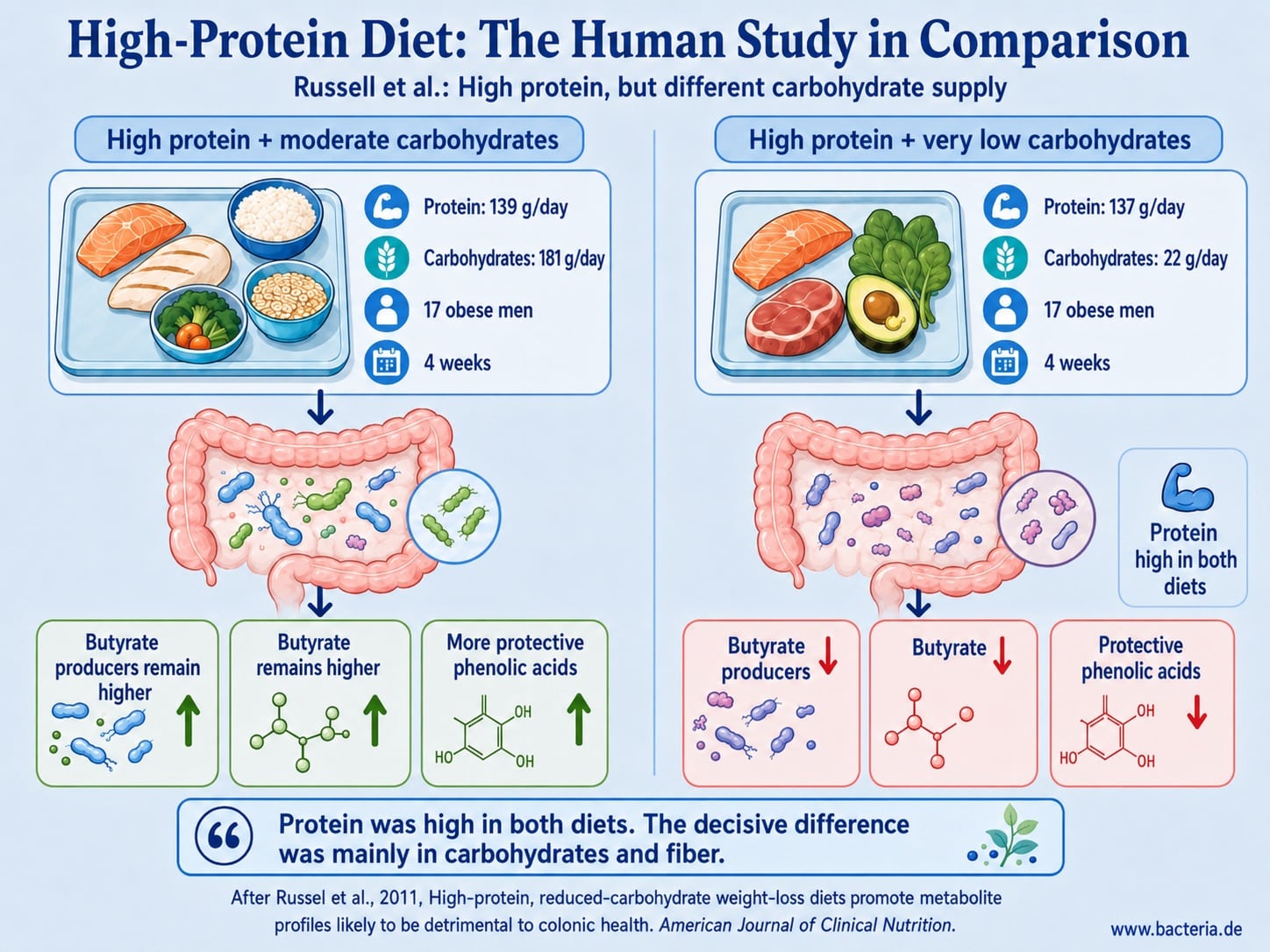
The effect was particularly clearly confirmed in a controlled human study. Obese men were placed on two different diets for four weeks each in a crossover design: a high-protein diet with a moderate carbohydrate content and a high-protein diet with a very low carbohydrate content. Only when the men consumed a high-protein, low-carbohydrate diet did the butyrate-producing bacteria decline and the levels of protective phenolic acids drop sharply. Since the protein content was high in both diets, this clearly shows that it was primarily the intake of carbohydrates and dietary fiber that made the difference. A lack of dietary fiber, on the other hand, leads to problems.
However, this does not completely stop protein fermentation. As is always the case in the natural sciences, a state of equilibrium is established. There are usually no absolute statements.
That is the key to understanding protein: A high-protein diet should always be accompanied by sufficient amounts of fermentable dietary fiber.
It should be noted, however, that some of the particularly relevant controlled human studies were conducted on obese men. There was no equal gender distribution. It therefore cannot be ruled out that, for example, healthy women might respond differently than obese men.
The Misconception About Plant-Based Versus Animal-Based Proteins
The fundamental debate in nutrition usually boils down to this: plant-based or animal-based? Plant-based proteins are generally considered the better choice. But why is that the case, even though their DIAAS is often lower than that of many animal-based proteins?
In fact, one might assume that a lower DIAAS means that more protein reaches the large intestine undigested. However, this is not the case, because a low DIAAS does not automatically mean that plant proteins are digested and absorbed less efficiently in the small intestine, resulting in large amounts reaching the large intestine. This is because the DIAAS is also determined by the amino acid composition.
The answer to the question of what makes plant-based proteins beneficial lies, once again, in their fiber content.
Protein-rich plant-based foods contain a whole range of other nutrients. Lentils are one example. In addition to protein, they also contain dietary fiber, phytochemicals, and minerals. The same is true for whole grains, beans, nuts, and chickpeas. In addition to protein, these plant-based foods also provide the carbohydrate substrate that steers bacterial fermentation in the right direction: toward carbohydrate fermentation and away from protein fermentation.
The benefit of plant-based protein sources therefore comes from the accompanying nutrients, not from the protein itself. The effect is due to dietary fiber, not protein.
However, this calculation doesn't hold true when highly purified vegan protein powder is used. During production, the plant-based raw material undergoes a process in which starch, fats, and dietary fiber are filtered out until only a highly concentrated protein powder remains. As a result, the very components that make plant-based foods particularly microbiome-friendly are removed. This means that the key advantage over animal protein is lost.
Of course, this does not mean that animal and vegan protein isolates are identical. They still differ in their amino acid profiles, digestibility, and how they are utilized by the microbiome.
But anyone who chooses a vegan isolate because it’s supposedly better for the gut due to its plant-based origin is getting a protein supplement that lacks precisely that benefit.
Does too much protein harm the gut?
There are many sensational claims circulating online about this topic: ranging from proteins creating a toxic intestinal environment to an increased risk of colorectal cancer. These sweeping claims—that a high protein intake in and of itself increases the risk of colorectal cancer—do not hold up to closer scrutiny. This should be distinguished from the frequent consumption of large amounts of processed meat. Studies have confirmed an increased risk of colorectal cancer in this context.
Much of the data on the harmful effects of protein fermentation comes from cell cultures and animal studies. Studies in humans, however, have not yet been able to demonstrate any toxic effects. In a controlled study of healthy individuals, a high-protein diet did lead to a measurable increase in protein fermentation, but not to increased cytotoxicity or genotoxicity in fecal water. Adverse metabolite profiles were observed in human studies where a high-protein diet was combined with a low-carbohydrate diet.
Does too much protein harm the microbiome?
Damage to the gut and damage to the microbiome are two completely different concepts. In the first case, the question is whether the gut is damaged by the metabolic byproducts produced during bacterial protein breakdown.
The second case concerns the question of whether the microbiome itself is altered in an unfavorable way by the proteins in the large intestine. Studies on this topic have so far failed to observe any consistent changes in the alpha or beta diversity of the microbiome. It should be noted at this point that this may also be related to the measurement methods used.
What could be measured, however, was a shift in microbial functions toward increased protein fermentation. This is understandable, since a greater supply of amino acids and peptides favors the bacteria that are particularly good at utilizing these substrates.
The key difference was not so much between high and low protein intake as between a high-protein diet low in fiber and a high-protein diet high in fiber.
Conclusion
It's not just the protein that's the problem.
The Western diet, which is high in protein and low in fiber, lacks an essential component: fermentable fiber. The current guideline from the German Nutrition Society (DGE) is at least 30 g of fiber per day. Protein isolates, in particular, should therefore be supplemented specifically, as they are completely lacking in fiber.
After all, a smart combination can help you achieve exactly what increased protein intake is intended to do: maintaining or building muscle mass, increasing strength, and the resulting greater “ease in life.”
And all of this without harming the microbiome or the gut.
Live Online Seminar
A High-Protein Diet: Good for Your Health or Bad for Your Gut and Microbiome?
How much protein is recommended? Which protein sources are particularly beneficial for the gut and the microbiome? And how can a high-protein diet be combined with an adequate intake of fiber?
The upcoming My Bacteria Live seminar will explore scientific findings on the interactions between proteins, the gut, and the microbiome in greater depth and apply them to practical nutrition.
The seminar takes place over a weekend, with two-hour sessions on both Saturday and Sunday. In addition to scientific fundamentals and in-depth insights, the seminar covers protein requirements, protein powder, high-protein products, dietary fiber, microbiome hacks, specific meal examples, and questions from participants.
By signing up for the non-binding waiting list, you'll be the first to receive all the information about the live seminar, the date, and how to register.
The seminar will be held in English and will take place live via Zoom in an interactive format . You can find more information about it here.
Non-binding registration on the waiting list:
Bibliography
The scientific findings presented in this article are based on the original studies, controlled trials, and systematic reviews listed below:
Andriamihaja M, Lan A, Beaumont M, Audebert M, Wong X, Yamada K, et al. The deleterious metabolic and genotoxic effects of the bacterial metabolite p-cresol on colonic epithelial cells. Free Radical Biology and Medicine. 2015;85:219-227. DOI: 10.1016/j.freeradbiomed.2015.04.004. PMID: 25881551.
Ang Q, Alexander M, Newman JC, Tian Y, Cai J, Upadhyay V, et al. Ketogenic diets alter the gut microbiome, resulting in a decrease in intestinal Th17 cells. Cell. 2020;181:1263-1275.e16. DOI: 10.1016/j.cell.2020.04.027. PMID: 32437658.
Aslam H, Trakman G, Dissanayake T, Todd E, Harrison P, Alby C, et al. Dietary interventions and the gut microbiota: a systematic literature review of 80 controlled clinical trials. Journal of Translational Medicine. 2026;24:39. DOI: 10.1186/s12967-025-07428-9. PMID: 41501909.
Attaye I, Bel Lassen P, Adriouch S, Steinbach E, Patiño-Navarrete R, Davids M, et al. Protein supplementation alters gut microbial diversity and derived metabolites in individuals with type 2 diabetes. iScience. 2023;26:107471. DOI: 10.1016/j.isci.2023.107471. PMID: 37599833.
Attene-Ramos MS, Wagner ED, Plewa MJ, Gaskins HR. Evidence that hydrogen sulfide is a genotoxic agent. Molecular Cancer Research. 2006;4:9-14. DOI: 10.1158/1541-7786.MCR-05-0126. PMID: 16446402.
Bansal T, Alaniz RC, Wood TK, Jayaraman A. The bacterial signal indole increases tight-junction resistance in epithelial cells and attenuates markers of inflammation. Proceedings of the National Academy of Sciences of the United States of America. 2010;107:228-233. DOI: 10.1073/pnas.0906112107. PMID: 19966295.
Basciani S, Camajani E, Contini S, Persichetti A, Risi R, Bertoldi L, et al. Very-low-calorie ketogenic diets with whey, vegetable, or animal protein in patients with obesity: a randomized pilot study. Journal of Clinical Endocrinology and Metabolism. 2020;105:2939-2949. DOI: 10.1210/clinem/dgaa336. PMID: 32484877.
Beaumont M, Portune KJ, Steuer N, Lan A, Cerrudo V, Audebert M, et al. Quantity and source of dietary protein influence metabolite production by gut microbiota and gene expression in the rectal mucosa: a randomized, parallel, double-blind trial in overweight humans. American Journal of Clinical Nutrition. 2017;106:1005-1019. DOI: 10.3945/ajcn.117.158816. PMID: 28903954.
Bel Lassen P, Attaye I, Adriouch S, Nicolaou M, Aron-Wisnewsky J, Nielsen T, et al. Protein intake, metabolic status, and the gut microbiota in different ethnic groups: results from two independent cohorts. Nutrients. 2021;13:3159. DOI: 10.3390/nu13093159. PMID: 34579043.
Birkett A, Muir J, Phillips J, Jones G, O’Dea K. Resistant starch lowers fecal concentrations of ammonia and phenols in humans. American Journal of Clinical Nutrition. 1996;63:766-772. DOI: 10.1093/ajcn/63.5.766. PMID: 8615362.
Blachier F, Beaumont M, Portune KJ, Steuer N, Lan A, Audebert M, et al. High-protein diets for weight management: interactions with the intestinal microbiota and consequences for gut health. A position paper by the My New Gut study group. Clinical Nutrition. 2019;38:1012-1022. DOI: 10.1016/j.clnu.2018.09.016. PMID: 30274898.
Chassaing B, Compher C, Bonhomme B, Liu Q, Tian Y, Walters W, et al. A randomized controlled-feeding study of the dietary emulsifier carboxymethylcellulose reveals detrimental effects on the gut microbiota and metabolome. Gastroenterology. 2022;162:743-756. DOI: 10.1053/j.gastro.2021.11.006.
Clarke SF, Murphy EF, O’Sullivan O, Lucey AJ, Humphreys M, Hogan A, et al. Exercise and associated dietary extremes impact gut microbial diversity. Gut. 2014;63:1913-1920. DOI: 10.1136/gutjnl-2013-306541. PMID: 25021423.
Cronin O, Barton W, Skuse P, Penney NC, Garcia-Perez I, Murphy EF, et al. A prospective metagenomic and metabolomic analysis of the impact of exercise and/or whey protein supplementation on the gut microbiome of sedentary adults. mSystems. 2018;3:e00044-18. DOI: 10.1128/mSystems.00044-18.
David LA, Maurice CF, Carmody RN, Gootenberg DB, Button JE, Wolfe BE, et al. Diet rapidly and reproducibly alters the human gut microbiome. Nature. 2014;505:559-563. DOI: 10.1038/nature12820.
Davis RH, Bryant RV, Gibson PR, Day AS. The fate of dietary protein in the gastrointestinal tract and implications for colonic disease. Nature Reviews Gastroenterology & Hepatology. 2026;23:381-394. DOI: 10.1038/s41575-026-01173-0.
German Nutrition Society (DGE). Selected Questions and Answers on Dietary Fiber. DGE, 2026.
Dong TS, Luu K, Lagishetty V, Sedighian F, Woo SL, Dreskin BW, et al. A high-protein, calorie-restricted diet alters the gut microbiome in obesity. Nutrients. 2020;12:3221. DOI: 10.3390/nu12103221. PMID: 33096810.
Duncan SH, Belenguer A, Holtrop G, Johnstone AM, Flint HJ, Lobley GE. Reduced dietary intake of carbohydrates by obese subjects results in decreased concentrations of butyrate and butyrate-producing bacteria in feces. Applied and Environmental Microbiology. 2007;73:1073-1078. DOI: 10.1128/AEM.02340-06. PMID: 17189447.
Evenepoel P, Claus D, Geypens B, Hiele M, Geboes K, Rutgeerts P, Ghoos Y. Amount and fate of egg protein escaping assimilation in the human small intestine. American Journal of Physiology—Gastrointestinal and Liver Physiology. 1999;277:G935-G943. DOI: 10.1152/ajpgi.1999.277.5.G935. PMID: 10564098.
Fluitman KS, Hesp AC, Nieuwdorp M, Visser M, IJzerman RG. Personalized dietary advice to increase protein intake in older adults does not affect the gut microbiota, appetite, or central processing of food stimuli in community-dwelling older adults: a six-month randomized controlled trial. Nutrients. 2023;15:332. DOI: 10.3390/nu15020332. PMID: 36678203.
Geypens B, Claus D, Evenepoel P, Hiele M, Maes B, Peeters M, Rutgeerts P, Ghoos Y. Influence of dietary protein supplements on the formation of bacterial metabolites in the colon. Gut. 1997;41:70-76. DOI: 10.1136/gut.41.1.70. PMID: 9274475.
Gratz SW, Hazim S, Richardson AJ, Scobbie L, Johnstone AM, Fyfe C, et al. Dietary carbohydrate, rather than protein intake, drives colonic microbial fermentation during weight loss. European Journal of Nutrition. 2019;58:1147–1158. DOI: 10.1007/s00394-018-1629-x. PMID: 29464347.
Hunter AK, Adair K, Horgan A, Jordan J, Stadler DD, Bohannan BJM. Impact of dietary protein intake on the non-dysbiotic human microbiome: a controlled feeding study. Scientific Reports. 2026;16:16195. DOI: 10.1038/s41598-026-46663-y. PMID: 41957416.
Jantchou P, Morois S, Clavel-Chapelon F, Boutron-Ruault MC, Carbonnel F. Animal protein intake and risk of inflammatory bowel disease: the E3N prospective study. American Journal of Gastroenterology. 2010;105:2195-2201. DOI: 10.1038/ajg.2010.192. PMID: 20461067.
Jowett SL, Seal CJ, Pearce MS, Phillips E, Gregory W, Barton JR, Welfare MR. Influence of dietary factors on the clinical course of ulcerative colitis: a prospective cohort study. Gut. 2004;53:1479-1484. DOI: 10.1136/gut.2003.024828. PMID: 15361498.
Kroplewski B, Przybyłowicz KE, Sawicki T, Przemieniecki SW. Supplementation with animal- and plant-derived proteins modulates the structure and predicted metabolic potential of the gut microbiota in elite soccer players. Nutrients. 2026;18:768. DOI: 10.3390/nu18050768. PMID: 41829938.
Lenhart A, Chey WD. A systematic review of the effects of polyols on gastrointestinal health and irritable bowel syndrome. Advances in Nutrition. 2017;8:587-596. DOI: 10.3945/an.117.015560. PMID: 28710145.
Mak IEK, Yao Y, Ng MTT, Kim JE. Influence of interactions between dietary protein and fiber intake on the composition and function of the human gut microbiota: a systematic review and network meta-analysis of randomized controlled trials. Critical Reviews in Food Science and Nutrition. 2025. DOI: 10.1080/10408398.2025.2452362. PMID: 39815995.
Mak IEK, Yao Y, Sutanto CN, Leong ZN, Khoo CM, Kim JE. Different sources of higher protein intakes result in minimal changes in gut microbiota composition and metabolism when following a healthier dietary pattern: a randomized controlled trial. Food Research International. 2026;231:118660. DOI: 10.1016/j.foodres.2026.118660.
McKenna CF, Salvador AF, Hughes RL, Scaroni SE, Alamilla RA, Askow AT, et al. Higher protein intake during resistance training does not enhance strength but modulates the gut microbiota in middle-aged adults: a randomized controlled trial. American Journal of Physiology-Endocrinology and Metabolism. 2021;320:E900-E913. DOI: 10.1152/ajpendo.00574.2020. PMID: 33682457.
Mitchell SM, Milan AM, Mitchell CJ, Gillies NA, D’Souza RF, Zeng N, et al. Protein intake at twice the RDA in older men increases circulatory concentrations of the microbiome metabolite trimethylamine-N-oxide. Nutrients. 2019;11:2207. DOI: 10.3390/nu11092207. PMID: 31547446.
Mitchell SM, McKenzie EJ, Mitchell CJ, Milan AM, Zeng N, D’Souza RF, et al. A 10-week period of increased protein intake does not alter fecal microbiota or volatile metabolites in healthy older men: a randomized controlled trial. Journal of Nutritional Science. 2020;9:e25. DOI: 10.1017/jns.2020.15. PMID: 32742642.
Moreno-Pérez D, Bressa C, Bailén M, Hamed-Bousdar S, Naclerio F, Carmona M, et al. Effect of a protein supplement on the gut microbiota of endurance athletes: a randomized, controlled, double-blind pilot study. Nutrients. 2018;10:337. DOI: 10.3390/nu10030337. PMID: 29534465.
Prado S, Kamm A, Dannenberg K, Keidel I, Castro-Alves V, Hyötyläinen T, et al. Effects of incrementally increased plant-based protein intake on gut microbiota and inflammatory-metabolic biomarkers in healthy adults. Food & Function. 2026;17:942-956. DOI: 10.1039/D5FO02653A. PMID: 41481420.
Russell WR, Gratz SW, Duncan SH, Holtrop G, Ince J, Scobbie L, et al. High-protein, reduced-carbohydrate weight-loss diets promote metabolite profiles likely to be detrimental to colon health. American Journal of Clinical Nutrition. 2011;93:1062-1072. DOI: 10.3945/ajcn.110.002188. PMID: 21389180.
Suez J, Cohen Y, Valdés-Mas R, Mor U, Dori-Bachash M, Federici S, et al. Personalized microbiome-driven effects of non-nutritive sweeteners on human glucose tolerance. Cell. 2022;185:3307-3328.e19. DOI: 10.1016/j.cell.2022.07.016. PMID: 35987213.
Venkatesh M, Mukherjee S, Wang H, Li H, Sun K, Benechet AP, et al. Symbiotic bacterial metabolites regulate gastrointestinal barrier function via the xenobiotic sensor PXR and Toll-like receptor 4. Immunity. 2014;41:296-310. DOI: 10.1016/j.immuni.2014.06.014. PMID: 25065623.
Windey K, De Preter V, Louat T, Schuit F, Herman J, Vansant G, Verbeke K. Modulation of protein fermentation does not affect fecal water toxicity: a randomized crossover study in healthy subjects. PLoS ONE. 2012;7:e52387. DOI: 10.1371/journal.pone.0052387. PMID: 23285019.
Windey K, De Preter V, Verbeke K. The relevance of protein fermentation to gut health. Molecular Nutrition & Food Research. 2012;56:184-196. DOI: 10.1002/mnfr.201100542. PMID: 22121108.
Zöhrer PA, Unterberger S, Aschauer R, Draxler A, Somloi S, Kapeller M, et al. The impact of a high-protein diet combined with strength training on the gastrointestinal microbiota in community-dwelling older adults: a subanalysis of a randomized controlled trial. Frontiers in Nutrition. 2026;12:1712451. DOI: 10.3389/fnut.2025.1712451. PMID: 41640738.